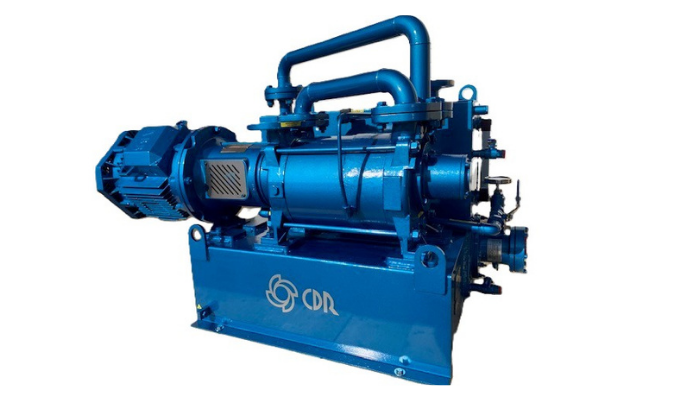
Pump cavitation reduces the efficiency and lifespan of industrial pumping equipment. This guide explains how it occurs and how to prevent it, helping you to prevent equipment failure and unplanned downtime.
Pump cavitation is one of the most costly issues in industrial pump systems, actively damaging internal components over time, reducing pump performance, and leading to premature equipment failure. In many cases, cavitation damage goes unnoticed until it has already shortened the life of a pump.
By understanding how it occurs and how to prevent it, you can maintain your pump’s efficiency and extend its lifespan, avoiding unplanned downtime and costly replacements.
How Does Pump Cavitation Occur?
Pump cavitation occurs when a liquid begins to boil due to a pressure drop.
While boiling is usually associated with high temperatures, it can also occur at lower temperatures if pressure is reduced sufficiently. In pump systems, this is exactly what creates the problem.
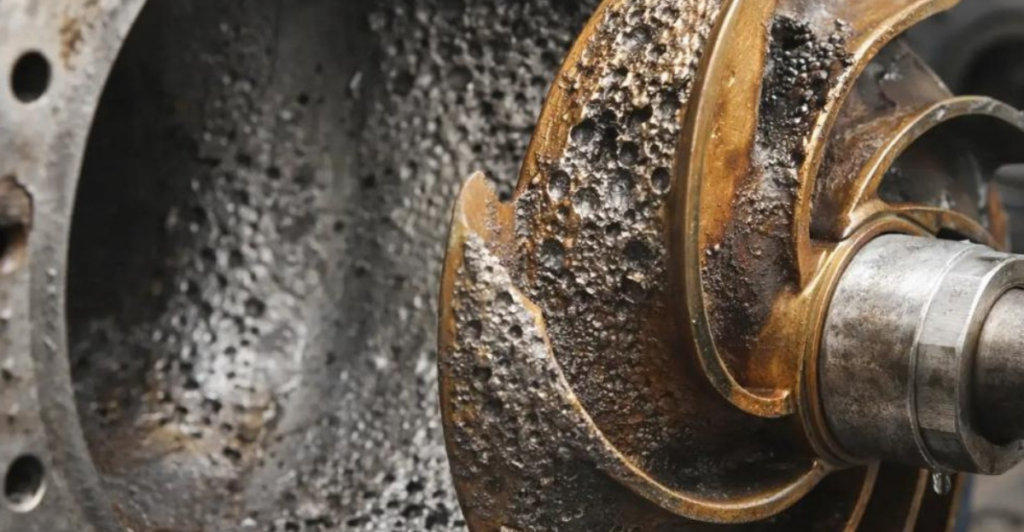
In a centrifugal pump, there is a significant pressure drop at the impeller’s eye. If the pressure drops below the liquid’s vapour pressure, it begins to boil, forming vapour bubbles. As these bubbles move into higher-pressure regions inside the pump, they rapidly implode, releasing concentrated shockwaves. These implosions are what cause the damage associated with cavitation.
Pump Cavitation in Four Steps
- Pressure drop: At the impeller’s eye
- Bubble formation: Liquid vaporises as pressure falls below vapour pressure
- Implosion: Bubbles collapse in higher-pressure regions within the pump
- Damage: Shockwaves erode internal components over time
Common Causes of Pump Cavitation
In practice, we often see cavitation caused not by a single issue, but by a combination of suction conditions, pump selection, and evolving system demands.
The most common root causes include:
- Insufficient NPSH (Net Positive Suction Head): If available NPSH is too low, pressure drops below vapour pressure inside the pump
- Poor system design: Restrictions, sharp bends, and pipe diameter changes can reduce inlet pressure
- Incorrect pump selection: Oversized or undersized pumps can operate outside optimal conditions
- Changes in operating conditions: Temperature increases or demand changes can introduce cavitation risk over time
Signs of Pump Cavitation
Recognising the signs of cavitation is key to maintaining pump efficiency and avoiding damage. These symptoms are often mistaken for general wear or mechanical issues.
Here are some key indicators we often see in site investigations:
- Crackling or ‘gravel’ noise: Cavitation is often described as bubbling, crackling, or gravel rattling around the pump housing or pipework
- Increased vibration: You may notice unusual vibrations while the pump is in operation.
- Drop in pressure: The discharge pressure will be lower than expected.
- Power fluctuations: More power might be needed to achieve the same throughput
- Debris in output: You might notice small particles in the discharged liquid
If left unresolved, these symptoms will worsen over time.
How to Prevent Pump Cavitation
In many cases, relatively small adjustments to system design or operating conditions can eliminate cavitation entirely – if identified early.
- Ensure adequate NPSH: Ensure that the available NPSH exceeds the required NPSH
- Optimise Suction Conditions:
- Design fluid systems with smooth, unrestricted flow paths to minimise turbulence and pressure drops
- Avoid sharp bends and sudden pipe diameter changes
- Install inlet flow straighteners or diffusers to distribute flow evenly, and increase pressure at the pump inlet
- Select the right pump: Make sure it is the right size for its intended application and remember to review pump selection if there is a change of duty
- Monitor system performance: Using flowmeters, vibration sensors, sound detectors, temperature sensors, or pressure sensors for real-time monitoring
- Regular maintenance and inspection:
- Carry out routine checks of pump components to identify early signs of wear or damage
- Act early when cavitation issues appear
The Real Cost of Pump Cavitation
Pump cavitation is not just a technical issue, it’s a commercial risk.
It can lead to:
- Higher energy costs due to reduced system efficiency
- Frequent maintenance and part replacement
- Unexpected downtime impacting production
- Shortened pump lifespan, increasing capital expenditure
In high-demand environments like chemical processing, even minor cavitation can escalate into significant operational losses. In many cases, these costs far exceed the investment required to prevent cavitation in the first place.
Concerned About Cavitation in Your Pump?
Understanding and preventing cavitation is crucial for maintaining the efficiency and longevity of your industrial pumps. Cavitation rarely has a single cause, and by the time it becomes obvious, damage is often already underway.
At CDR Pumps (UK) Ltd, we work with engineers and operators to identify cavitation risks early and resolve them at source.
This includes:
- Reviewing system design and suction conditions
- Recommending pump upgrades or configuration changes
- Supporting installation and commissioning
We regularly support clients in diagnosing and resolving cavitation issues across a wide range of industrial applications.
Because we specialise in chemical and high-integrity pumping applications, we understand how small design details can have a significant impact on long-term reliability. The earlier cavitation is identified, the easier it is to resolve.
If you’re unsure whether cavitation could be affecting your pump system, a technical assessment can often pinpoint the root cause quickly – avoiding unnecessary maintenance or premature equipment replacement.
Get in touch with our specialist team on 01933 67477 or at sales@cdrpumps.co.uk – we’re here to help.