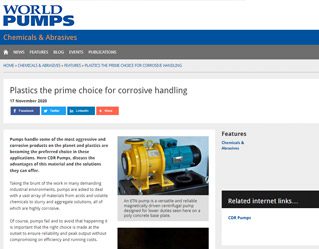
Chemical process pumps handle some of the most aggressive and corrosive products on the planet, and plastics are becoming the preferred material choice.
Plastic pumps can be either injection molded or lined, with most of our range being centrifugal mag drive pumps. They take the brunt of the work in demanding industrial environments, chemical process pumps are asked to deal with a vast array of materials from acids and volatile chemicals to slurry and aggregate solutions, all of which are highly corrosive.
Are plastic pumps inferior to steel pumps?
Not at all.
Plastics may not seem like the material of choice for a chemical transfer pump, however, in the 1970s, CDR Pumps discovered that new solutions could be manufactured to meet a greater variety of chemical and pharmaceutical applications by introducing plastics. In 1978, the first plastic mag drive pump was developed at our manufacturing facility in Italy. The TMN-BS was produced in polypropylene, PVDF, and also ETFE and paved the way for more efficient pumps like the STN, ETN, and UTN.
The chemical resistance of many virgin plastics is excellent. The previously mentioned polypropylene, PVDF, and ETFE combined are resistant to over 1500 different chemical formulations. As a chemical pump manufacturer, we are proud that our plastic pumps are always manufactured with – or lined with – virgin materials
“We achieve really good corrosion resistance and they are cost-effective while they can operate at temperatures of up to 180°C. We always use virgin material rather than glass fiber which strengthens the product. Plastic components are useful in areas such as microchips and solvent manufacturing. It’s a growing market.”
Ashley Fenn, MD, CDR Pumps
The use of plastic pumps in chemical manufacturing
Recently, we were approached by a chemical manufacturing company that produces raw materials that feed into a wide range of manufacturing applications around the world. This company needed a safe solution to unload a 36% hydrochloric acid solution from two tankers simultaneously at a variety of different flow rates.
Hydrochloric acid in liquid form is corrosive and harmful to the skin, eyes, and the lining of your body cavities such as your nose and throat; however, fumes are created at ambient temperatures and lower which can irritate your lungs so it’s vitally important to keep people safe.
PFA – aka PerFluoroAlkoxy Polymer Compound – was the pump lining of choice for this installation. Demonstrating extreme chemical resistance and, while it is similar to PTFE in many ways, acids don’t stick to PFA quite so much meaning it is more stable, can last longer, and resist higher temperatures.
In this instance, four UTN-B PFA-Lined Magnetic Drive Pumps were chosen. This pump was lined with PFA and contained within a strong ductile iron casing. Mag drive pumps are renowned for containing fluids and vapours and are the safest option. We met the customer’s vari-flow requirements by adding a variable speed drive which gives the flexibility they need without causing any damage to the system or the pumps. Ordered, manufactured, tested, and delivered within six weeks meant that this site could save energy (and therefore) costs significantly quicker than they had anticipated.
Plastic pumps handle some of the most toxic fluids know and we are working hard to spread the benefits of plastic-lined pumps far and wide. To find out more, read our article on the World Pumps website
Read the Article
One thing that we are particularly proud of with our plastic-lined pumps, is our manufacturing process. CDR pumps are manufactured with a unique lining locking mechanism to ensure it stays in place and can’t be moved by the centrifugal force within the pump.
To find out more about the plastic lining options available and which plastics are the right choice for your toxic or hazardous chemicals, call 01933 674777 to speak to an engineer.