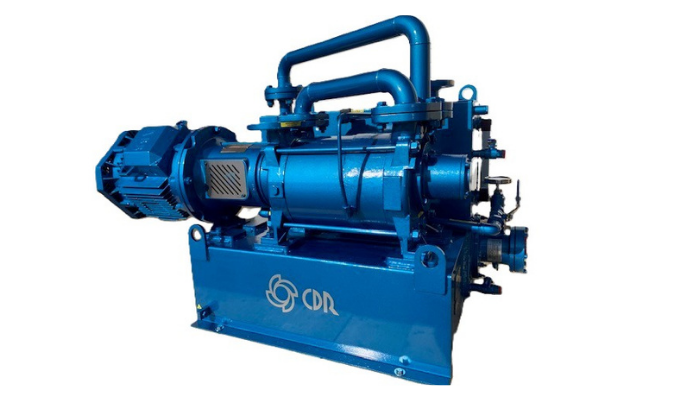
Maximising Efficiency with Liquid Ring Vacuum Pumps
In a world where resource efficiency is increasingly critical, liquid ring vacuum technology – with modern recirculation – is a smart investment.

In plastic extrusion, consistency is everything. Yet one of the most overlooked factors behind product quality, efficiency, and operational uptime is vacuum stability.
That’s where liquid ring vacuum pumps quietly make a major difference.
Used across multiple applications, from degassing and drying to thermoforming and extrusion, these systems deliver stable, reliable, vacuum conditions that support both ensure energy efficiency and operational performance.
The efficiency of liquid ring vacuum pumps is driven by three core components working in precise harmony. Together, they create a unique pumping mechanism ideally suited to demanding plastic processing applications.
Maintaining the correct vacuum level is essential for effective plastic processing. Liquid ring vacuum pumps can achieve pressures as low as 33 mbar, providing the flexibility to support a wide range of processing requirements. The optimal vacuum pressure will vary depending on factors such as material type and thickness.
Precise vacuum control directly impacts product quality. Effective degassing delivers measurable improvements, including:
When vacuum levels fall below required specifications, the consequences are immediate and costly – including incomplete mould filling, burn marks, and poor surface finish. In contrast, stable vacuum conditions protect the thermal integrity of heat-sensitive additives, pigments, and resins, ensuring reliable, high-quality output.
Reducing energy consumption and operating costs is a key priority in modern plastic processing. One of the most effective ways to achieve this is through the integration of heat exchangers.
During operation, liquid ring vacuum pumps naturally generate heat through compression – energy that is often lost to the environment. Instead of allowing this valuable resource to dissipate, our liquid ring vacuum systems capture and repurpose this heat using robust shell-and-tube heat exchangers.
These systems offer excellent resistance to contamination and operate reliably in demanding environments. The result is improved energy efficiency, reduced waste, and consistent performance – even under the challenging conditions typical of plastic processing applications.
A leading plastic extrusion manufacturer, known for producing high-quality plastic products, approached CDR Pumps with a critical performance issue. Their existing vacuum system was suffering from pressure loss, caused in part by oil and sludge build-up within the heat exchangers. This was ultimately compromising the entire extrusion process.
The impact was significant:
Our engineering team worked closely with the customer to understand the operational challenges and identify the most effective solution. Initially, we recommended a planned preventative maintenance (PPM) and cleaning strategy to restore performance. However, this delivered only limited improvement.
A detailed root cause analysis revealed that the existing system design itself was the issue – requiring a more robust, long-term solution.
We implemented a Hydrosys vacuum package to meet the customer’s needs, which included:
To further enhance uptime, we integrated two additional standby heat exchangers with isolation valves, enabling rapid changeover without interrupting production. The removable tube bundle design also simplified cleaning and maintenance – significantly reducing service time.
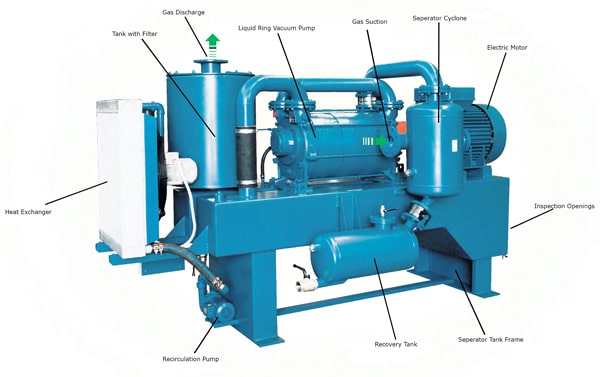
The core components of the HydroSys Liquid Ring Vacuum System.
The new system was installed with minimal disruption to ongoing operations, delivering immediate and measurable improvements:
The upgraded system also supports the customer’s sustainability goals by reducing energy consumption and process waste, whilst its modular design allows for future expansion.
This project demonstrates the transformative impact of a targeted, engineered solution. By addressing the root cause – not just the symptoms – we delivered lasting improvements in efficiency, product quality, and operational resilience.
Liquid ring vacuum pumps remain a vital component in plastic processing, providing stable, reliable vacuum generation across demanding applications. With precise control, they help prevent common defects such as surface imperfections and incomplete forming – ensuring consistently high-quality output.
If you’re looking to optimise your plastic extrusion process with a proven, high-performance vacuum solution, get in touch with our team.
In a world where resource efficiency is increasingly critical, liquid ring vacuum technology – with modern recirculation – is a smart investment.
A UK manufacturer cut pumping energy costs by nearly £1 million in a single year by replacing compressed air-driven pumps with high-efficiency electric alternatives.

We are pleased to be exhibiting at CHEMUK 2026, the UK’s leading trade show for the chemical, process engineering and formulated product industries.

We are delighted to announce that CDR Pumps has been shortlisted as a finalist for the Chemicals Northwest Supplier to the Chemical Industry Award 2026.