Selecting the correct pump material for sodium hypochlorite (bleach) is critical to achieving safe, reliable operation and a long service life.
Polyethylene (PE) and polypropylene (PP) are widely recognised for their resistance to many aggressive chemicals, including caustic solutions, hydrochloric acid and low-concentration sulphuric acid. As a result, both materials are successfully used in chemical storage tanks, industrial pipework and pumps.
However, chemical resistance varies according to the particular fluid and operating conditions, and a material that performs well with one aggressive chemical may not be suitable for another. This is particularly important when considering polypropylene for sodium hypochlorite applications.
While polypropylene may provide a limited operational life in sodium hypochlorite applications, the strong oxidising properties of sodium hypochlorite can cause the polymer to degrade over time. For longer-term reliability, upgrading the pump material to PVDF, ETFE or even PFA should therefore be considered.
Understanding why requires looking at the different ways chemicals can affect polymer materials.
How Chemicals Affect Pump Materials
Two important mechanisms of chemical attack are solvation and chemical reaction.
Solvation
Solvation occurs when a chemical dissolves the polymer or, more commonly, is absorbed by it. This can cause the material to swell or soften, reducing its mechanical integrity.
Within a centrifugal pump, sufficient swelling can interfere with the clearances between components and potentially cause rotating parts to seize.
The chemical structure of the polymer itself is not changed during solvation, and in very mild cases where swelling is minimal, the effects may be reversible.
Chemical Reaction
Chemical reaction is different because the chemical structure of the polymer itself changes.
This can alter its molecular weight and cause a deterioration in its physical properties, potentially leading to degradation and eventual component failure.
Sodium Hypochlorite and Environmental Stress Cracking
Another related failure mechanism is Environmental Stress Cracking (ESC).
ESC is often described as a form of chemical attack, but it is more accurately associated with a complex interaction between chemical exposure and mechanical stress. It can be initiated by exposure to particular classes of liquids, especially surfactants such as soaps, in combination with factors including plasticisation, migration and relatively low levels of mechanical stress.
ESC is more commonly associated with polyethylene. However, polypropylene exposed to sodium hypochlorite can experience a failure mechanism resembling environmental stress cracking.
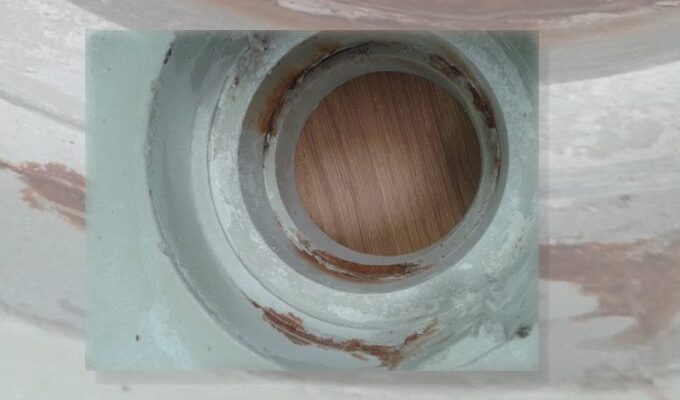
In this case, the strong oxidising action of sodium hypochlorite can degrade the polypropylene, eventually resulting in material failure.
Failures can become particularly apparent at areas of stress concentration, such as sharp corners in pump and valve components, pipework joints and the edges of tanks.
Selecting Pump Materials for Sodium Hypochlorite
Although polypropylene is resistant to many aggressive chemicals, its suitability should not be assumed for sodium hypochlorite simply because it performs well with other corrosive fluids.
For sodium hypochlorite pumping applications where long-term reliability is required, PVDF, ETFE or even PFA can provide more suitable material options than polypropylene.
Correct material selection at the specification stage can help reduce premature component degradation and provide a safer, more reliable long-term pumping solution.
If you’re specifying a pump for sodium hypochlorite or another aggressive chemical, our engineers can assess your requirements and recommend a suitable solution.
Contact the CDR Pumps team on 01933 674777 or sales@cdrpumps.co.uk