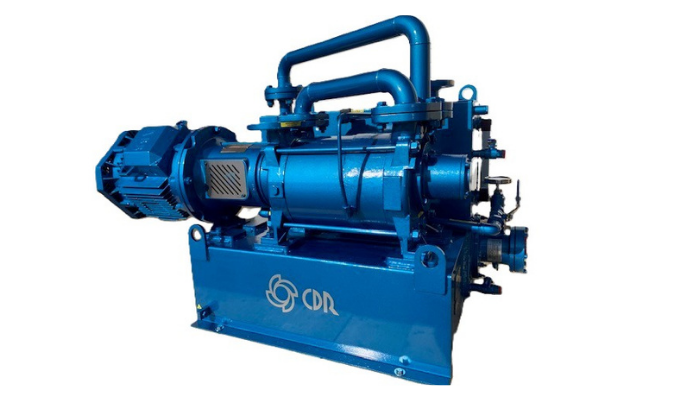
When pumping flammable or volatile fluids in potentially explosive atmospheres, controlling sources of ignition is a critical consideration.
CDR Pumps offers conductive PFA as a lining option for its ATEX-certified centrifugal pumps, combining the chemical resistance required for demanding industrial applications with the electrical conductivity needed to help safely dissipate electrostatic charge.
What is Conductive PFA?
PFA (perfluoroalkoxy) is a thermoplastic fluoropolymer valued for its excellent chemical resistance and ability to retain its properties at elevated temperatures, making it well suited to demanding chemical processing applications.
Conductive PFA is a specialised form of PFA incorporating conductive additives. These create an electrically conductive path through the material, helping to prevent the accumulation of electrostatic charge while retaining the chemical-resistant properties required for handling aggressive fluids.
This is particularly important when pumping flammable or volatile fluids, where an electrostatic discharge could potentially provide a source of ignition. By helping to safely dissipate static charge, conductive PFA can contribute to protecting both operators and equipment in hazardous pumping applications.
Understanding ATEX Requirements for Centrifugal Pumps
ATEX requirements apply to equipment intended for use in potentially explosive atmospheres, including centrifugal pumps operating where flammable gases, vapours or dusts may be present.
Pumps specified for these environments must be appropriately designed and selected for the relevant hazardous area classification, with potential ignition sources carefully controlled.
Electrostatic discharge is one potential ignition source, which is why the electrical properties of pump materials can become particularly important when handling flammable or volatile fluids.
Benefits of Using Conductive PFA in ATEX-Certified Centrifugal Pumps
Improved Safety
Conductive PFA helps dissipate electrostatic charge, reducing the potential for static build-up when pumping flammable or volatile fluids and helping to control a potential source of ignition.
Increased Reliability
Conductive PFA retains the excellent chemical resistance associated with conventional PFA, making it suitable for handling a wide range of corrosive and aggressive fluids. Its smooth, low-adhesion surface can also help reduce fluid build-up, clogging and fouling even in demanding applications, supporting reliable pump operation and reducing cleaning and maintenance requirements.
Improved Efficiency
The smooth, non-porous surface of conductive PFA minimises friction between the pumped fluid and the wetted surfaces. This contributes to efficient fluid flow and overall pump performance. It can also help to reduce energy consumption and associated operating costs.
What Makes Conductive PFA Different?
Chemical Resistance
Conventional PFA provides excellent chemical resistance, ability to retain its properties at elevated temperatures, and a smooth, low-adhesion surface. Conductive PFA retains these chemical-resistant characteristics while adding an important property for hazardous area applications: electrical conductivity.
Conductivity
Conductive additives incorporated into the PFA create a path through which electrostatic charge can dissipate. Because the electrical conductivity is inherent within the lining, this can simplify the measures required to manage static within the pump and reduce the potential for installation error. Appropriate grounding and bonding of the overall pumping system is still required.
Weight
As with other plastic-lined pump designs, weight can also be an advantage compared with some equivalent metallic pump constructions. A lighter overall pump can simplify handling and installation, particularly on larger units where supporting structures may otherwise need to be considered.
It’s important to remember that the appropriate pump material will always depend on the individual application, including the chemical being handled, operating temperature and pressure, and hazardous area requirements.
Factors to Consider When Specifying an ATEX-Certified Centrifugal Pump
Conductive PFA will not be suitable for every pumping application. When specifying an ATEX-certified centrifugal pump, several factors should be considered:
- Temperature and Pressure Ratings – the pump and lining material must be suitable for the operating temperature and pressure of the application
- Chemical Compatibility – compatibility should be checked against the specific fluid being handled, including its concentration and operating temperature
- Mechanical Strength – the pump construction must be suitable for the mechanical demands and operating conditions of the application
- Regulatory Compliance – the complete pump must be appropriately specified for the relevant hazardous area and ATEX requirements
Installation and Earthing of Conductive PFA-Lined Centrifugal Pumps
While conductive PFA provides inherent electrical conductivity, appropriate grounding and bonding of the overall pumping system is still essential. This maintains a continuous conductive path through which electrostatic charge can safely dissipate, rather than accumulating within the system.
Correct installation is therefore an important part of achieving the intended electrostatic protection provided by the conductive PFA lining.
Frequently Asked Questions
Is Conductive PFA Suitable For All Types of ATEX-certified Centrifugal Pumps?
Not necessarily. The suitability of conductive PFA depends on the specific pump and application. Factors including chemical compatibility, operating temperature and pressure, pump construction and hazardous area requirements should all be considered when specifying the appropriate pump and lining material.
How Does Conductive PFA Dissipate Static Electricity?
Conductive PFA contains conductive additives that create an electrically conductive path through the material. When the pump is correctly grounded as part of the wider system, this allows accumulated electrostatic charge to dissipate safely, helping to prevent the build-up of static electricity that could otherwise result in an electrostatic discharge and potential source of ignition.
Can Conductive PFA Be Used with Corrosive Fluids?
Yes. Conductive PFA retains the excellent chemical resistance associated with conventional PFA, making it suitable for handling a wide range of corrosive and aggressive fluids. However, chemical compatibility should always be checked against the specific fluid, its concentration and temperature, as well as the wider operating conditions.
Does a Conductive PFA-Lined Pump Still Require Grounding and Bonding?
Yes. While conductive PFA provides inherent electrical conductivity within the lining, appropriate grounding and bonding of the overall pumping system is still required. This provides a continuous path through which accumulated electrostatic charge can safely dissipate.
Specifying ATEX-Certified Centrifugal Pumps
Where flammable or volatile fluids need to be handled alongside demanding chemical conditions, conductive PFA can provide a valuable lining option for appropriately specified ATEX centrifugal pumps.
Selecting the right pump requires consideration of the complete application, including the fluid properties, operating conditions and hazardous area requirements.
If you’re considering a pump for a hazardous area application, our engineers can assess your requirements and recommend a suitable solution.
Contact the CDR Pumps team on 01933 674777 or sales@cdrpumps.co.uk